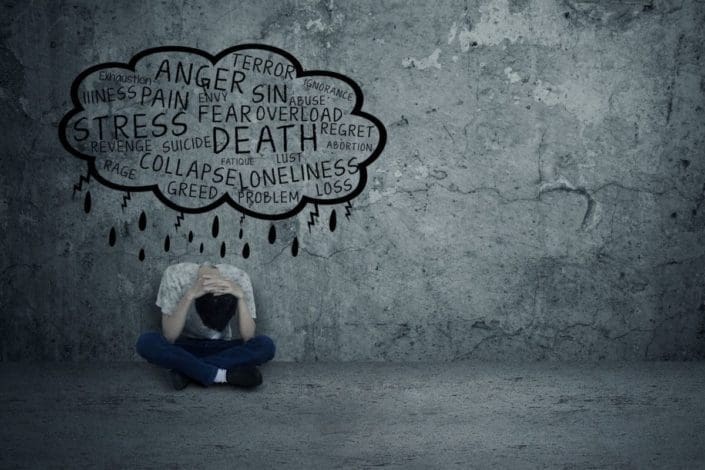
People deal with devastation in different ways. Some people allow a specific amount of time to feel upset, and then move on. Some people wallow in self-pity and resentment, and live that way for years, even their entire lives. Some people remain stoic, though God knows what is going on inside of them.
I had a job interview three weeks ago. When I left the interview I felt like I found my dream job. I felt like I found my calling, and I was so excited. I grew even more excited when I got a call just a few hours after the interview asking me for a second interview. Every day I grew more and more excited about this job. I had my second interview, and got an email minutes after it ended asking me to send in a writing sample. Later that afternoon I was asked for references. This job was mine. I prayed about it, I practiced positive thinking for the first time in my whole life, and did not even allow the thought of rejection to enter my mind. I practiced the "Attractor Factor", a book written by Joe Vitale discussing how people tend to attract what their minds focus on. I focused on the verse, and practiced it that says "Delight yourself in the Lord and He will give you the desires of your heart." Psalm 37:4. There was no doubt in my mind that I would get this job. Then I got the call that I was one of two candidates, that they were impressed with me, but they went with the other candidate who had just a bit more experience in the field than I did. I was devastated.
I went home from work that night and just wanted to sleep. I sulked some the next day. I was confused about everything. Why would God not follow through on his side of the Psalm 37:4 promise? How could I follow all the practices of positive thinking and attracting, and not get this job? After some thinking it came to me. God has something better planned for me.
I created an idealized version of the job in my mind based on my interactions with the interviewers at this job. It was that idealized version I fell in love with and thought was mine. But the desire of my heart was not for that particular job. My heart desired (and still desires) a job that I love, where I feel respected and feel like I am contributing something, a job that will provide a safe and secure financial situation for my family, and a job that I really feel passionate about. Maybe this job I interviewed for was not that. Maybe the job I interviewed for would have been worse than the one I am currently in. God sees all things, and when we are devastated by something, he has something good for us right around the corner.
Four and a half years ago I had just moved to Wisconsin with my wife. I was working a job and we put a down payment on a house that we were really excited about. A week before we closed on the house I lost my job and the mortgage company withdrew its loan approval. My very pregnant wife and I were devastated. At that time we were living in a hotel room with our almost two year old and our yellow lab. We eventually rented a house, which was okay for what it was worth, but it was never home. Two years later we were able to get pre-approved for another mortgage, and this time bought a house with much more of what we wanted in a house, and we are so much happier there than we ever would have been at the house that fell through (the house we lost out on didn't have a dishwasher. What were we thinking?). We were devastated when we lost the first house, but God had a better one planned for us (with a dishwasher!)
A couple of years after my wife and were first married, we wanted to start a family. We experienced two miscarriages that were absolutely devastating. The second miscarriage shook my faith to the core, and I think I am just now getting my faith in God back. I was in a dark place for years, and we thought we would never be able to have children. Then in 2012 we had our little miracle baby. In 2014 we had another sweet baby girl. In 2018 we had a third. We are still sad about the two we lost. I think about those babies that could have been. On the other hand, I realize I have been blessed by three amazing daughters who I would not trade for the world. I am so blessed to have them.
One final story. In 2001 I was fired from a job just weeks before my parents were going to move farther south. I did not want to move. I lined up an interview, but on my way there I rolled my car. All of the events I experienced forced me to move with my parents. For the first year I was in a deep depression. I slowly came out of it, but still was not happy I had my life disrupted. As it turns out we moved just blocks away from a college campus that had a graduate program starting the fall after I received my undergraduate degree, that was just what I was looking for. Four years after moving with my parents, I met my future wife. I found my first calling in hospice because of the move. It turned out to be what was best for me.
Like children we often go through life kicking and screaming because we want something, and we don't get it. I think about the times I upset my children by telling them they can't go outside in a t-shirt when it is 10 degrees out, and the devastation they seem to experience. They think they know what is best for them, but they really don't. I know what is best for them. When I did not get the job I so desperately wanted and thought was mine for the taking, God was telling me not to go out in 10 degree weather with just a t-shirt. Every devastating event I have experienced has been redeemed by beautiful things occurring that might not otherwise have occurred. Steve Jobs once said we do not understand things at the time they are happening, but we connect the dots afterwards. In other words, seemingly unrelated events, some good, some bad, occur in our lives. These events shape us, and the bad events are connected to the positive that does eventually happen in our lives. So I am choosing to put my faith in God, and know He has a better plan for my future.


